Evidence at a glance
Lightning develops in both directions. The pathfinder comes down. The brightest pulse goes up.
 Elsewhere Lab
Field note 001 · AtmosphereInteractive
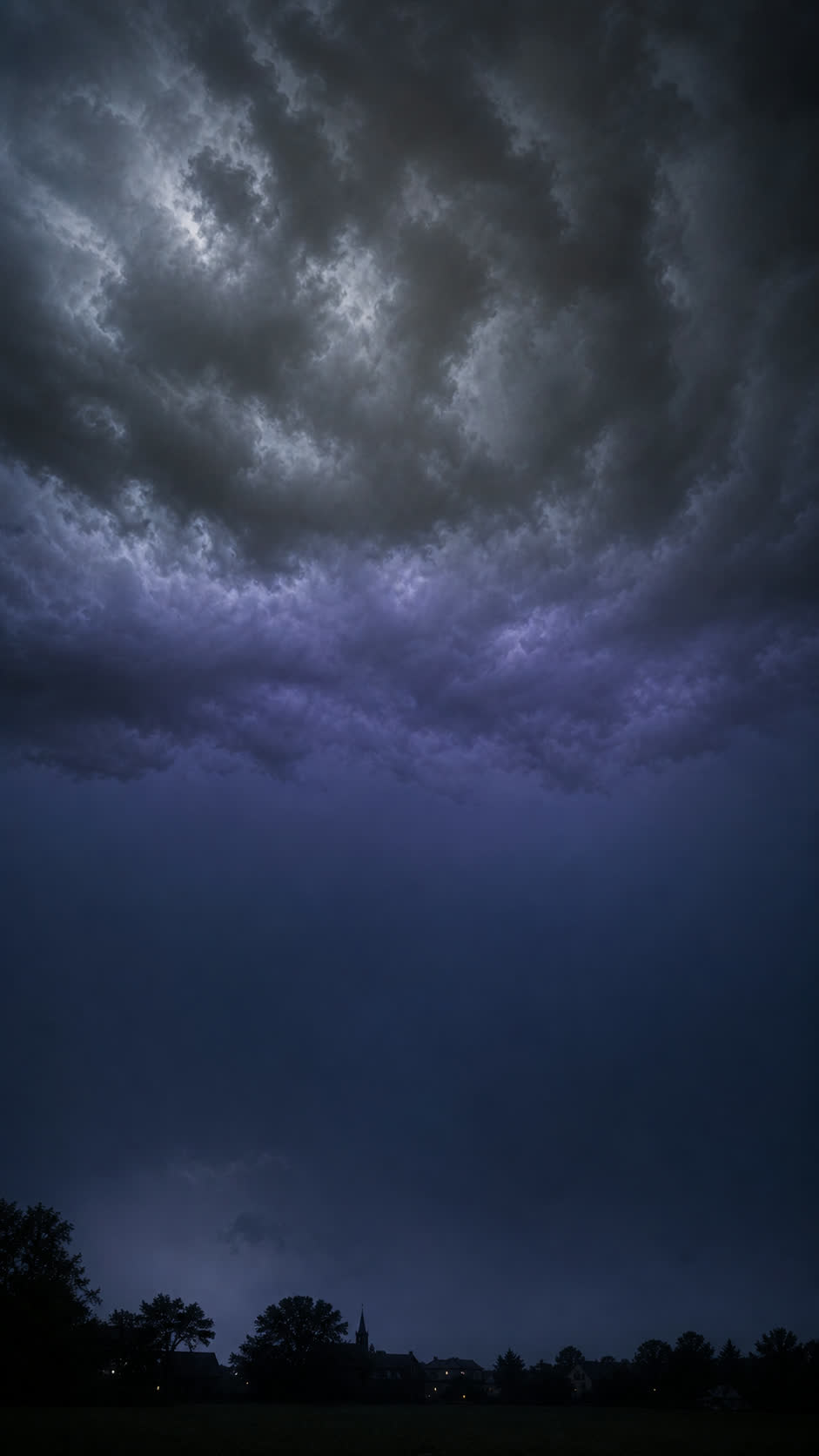
A bolt appears all at once to the eye. Slow the event down, make your prediction, and trace what happens before the brightest moment.
Build the channelScroll to investigate
Experiment 001 · Follow the flash
Make a prediction, watch the whole event, then investigate it one stage at a time. The answer stays hidden until the sequence reaches its brightest moment.
01 · Predict
Choose before you press play. There is no penalty for changing your mind.
Choose an answer, then watch the sequence.
02 · Observe
Try to follow the faint violet path first. The bright amber pulse comes later.
01 — BEFORE THE FLASH
Collisions between rising ice crystals and graupel help separate charge inside the cloud. The lower region becomes predominantly negative.
Source: National Weather Service ↗04 · Compare
The developing path and the brilliant return stroke are related events, but they do not move the same way.
05 · Take away
Evidence at a glance
Lightning develops in both directions. The pathfinder comes down. The brightest pulse goes up.
Length of one stepped-leader advance. NWS ↗
Upward propagation of the visible return stroke. NWS ↗
Attachment height above the surface. NWS Melbourne ↗
Scientific care
For a common negative cloud-to-ground flash, a branched stepped leader develops downward, upward streamers participate in attachment, and the bright return stroke then propagates upward through the completed channel.
The channel geometry, colours, brightness, distances and playback timing are designed for comparison. They are not a scale model, and the animation shows one stroke rather than every possible flicker or subsequent stroke.
Lightning also occurs within clouds, between clouds, as positive cloud-to-ground flashes and as upward-initiated events. Those forms can follow different sequences.
Published 11 September 2026 · Content reviewed 11 September 2026
Report a correction by email ↗Explore next · Sound & vibration
You’ve traced a lightning flash. Now change a tone and watch sand organise into a pattern on a vibrating plate.
Try the sound experimentContinue exploring
New visual stories about the hidden science of everyday life, the universe, and reality.
Follow on YouTube